Cryptocurrency trading is massive in Nigeria, but while most people are focused on "holding" Bitcoin and hoping the price goes up, a quiet subset of traders is making consistent daily profits through a method called Crypto Arbitrage.
In this 2026 guide, we will break down exactly what crypto arbitrage is, why the Nigerian financial ecosystem makes it so profitable, and how you can start safely.
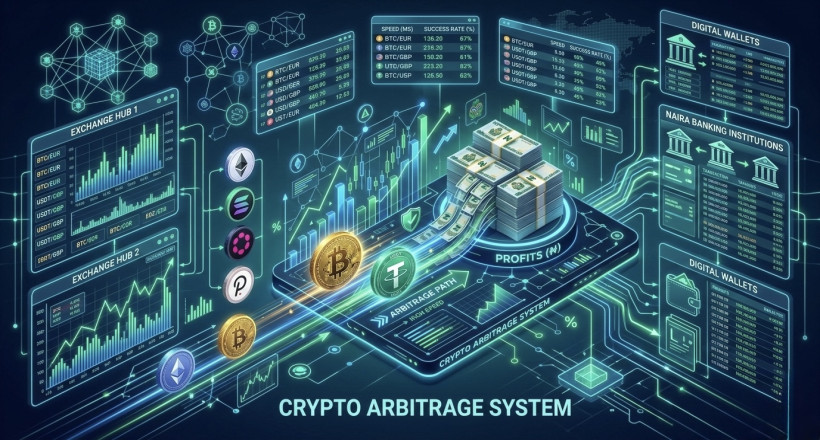
Arbitrage is a classic financial strategy that involves buying an asset in one market where the price is low and immediately selling it in another market where the price is higher. The difference between the two prices is your absolute, risk-free profit.
Arbitrage works incredibly well in Nigeria because of the parallel market exchange rate. Historically, US Dollars (USD) or Tether (USDT) on Nigerian local exchanges trade at a significantly higher "premium" compared to the official global rate due to strict Central Bank capital controls and local dollar scarcity. This price gap is where arbitrage traders make their money.
While arbitrage sounds like "free money," it carries significant risks if you don't know what you are doing. The biggest danger is transaction delay. If a blockchain network is congested and your crypto takes two hours to transfer between exchanges, the price might crash before you can sell it, wiping out your profit.
The other massive risk in P2P arbitrage is dealing with fraudulent buyers who send fake bank receipts or attempt to lock your funds in dispute mediation. This is why choosing the right platform is critical.
If you have successfully sourced cheap USDT or Bitcoin and are ready to cash out your arbitrage profits, relying on random P2P buyers is incredibly risky.
By utilizing a 100% verified, direct-liquidity portal like KachiPlug, you eliminate the risk of P2P scams altogether. We buy your cryptocurrency directly at premium parallel market rates and disburse the Naira instantly to your bank account via automated APIs. Faster execution means guaranteed arbitrage profits. Sign up today to secure your trading margins.