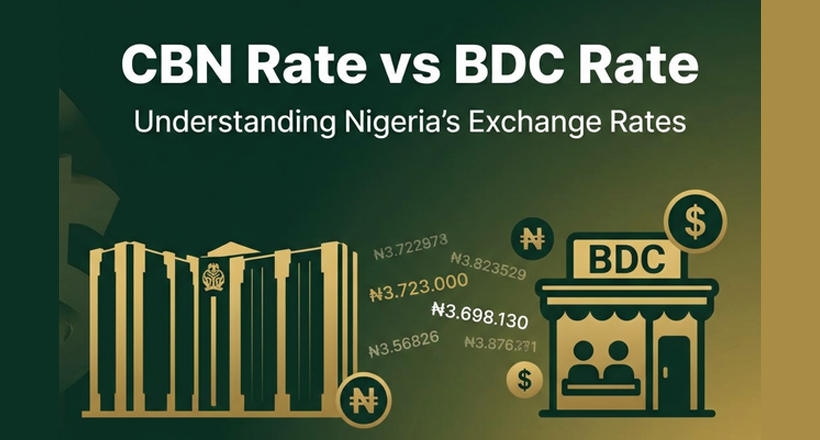
If you've ever tried to exchange dollars in Nigeria, you've likely heard three terms: CBN rate, BDC rate, and parallel market rate. But what do they actually mean? Why are they different? And which one should matter to you?
In this guide, we'll break down Nigeria's three-tier exchange rate system, explain why rates differ across channels, and show you how to get the best value for your foreign currency.
The CBN rate (Central Bank of Nigeria rate) is the official exchange rate set by Nigeria's central bank. It's determined through the Nigerian Foreign Exchange Market (NFEM) using a "willing buyer, willing seller" model.
Key facts about the CBN rate:
BDC stands for Bureau de Change — these are licensed exchange offices authorized by the CBN to buy and sell foreign currency. Think of them as the middlemen between the official market and the streets.
Key facts about BDC rates:
The parallel market (also called the "black market") is the unofficial exchange market where currency is traded outside formal banking channels. To learn more about how it works, read our detailed guide on what the parallel market is and why it exists.
Key facts about the parallel market:
| Feature | CBN Rate | BDC Rate | Parallel Market |
|---|---|---|---|
| Who sets it? | Central Bank of Nigeria | Licensed exchange offices | Street traders / supply & demand |
| Regulated? | ✅ Fully regulated | ✅ CBN-licensed | ❌ Unregulated |
| Typical rate (USD/NGN) | ~₦1,384 | ~₦1,385 - ₦1,395 | ~₦1,385 - ₦1,405 |
| Accessibility | Banks only (requires documentation) | Walk-in (with valid ID) | Anyone (cash transactions) |
| Best for | Businesses, importers | Travel allowance, small retail | Emergency needs, convenience |
| Risk level | ✅ Lowest | ✅ Low (if licensed) | ⚠️ Higher (counterfeit risk, scams) |
| Documentation needed | Extensive (Form A, invoices) | Valid ID, purpose of exchange | None |
Several factors create the gap between official and unofficial rates:
As of March 2026, the spread between CBN and parallel market rates has narrowed to roughly 1.2-1.5% — the tightest it's been in years. This is thanks to:
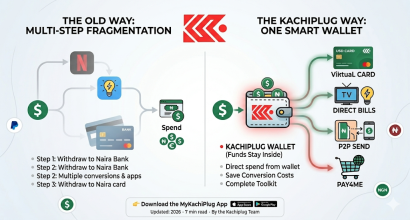
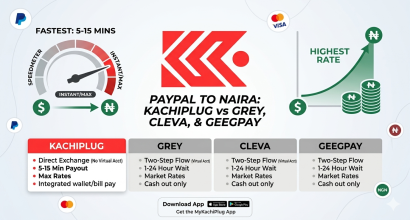
Beyond traditional BDCs and parallel markets, digital currency exchange platforms have become a major part of Nigeria's FX landscape. Platforms like KachiPlug Exchange offer Nigerians an alternative way to exchange foreign currency:
Which rate should I use for international payments?
For official payments like school fees abroad or business imports, the CBN rate through your bank (via Form A) is the most cost-effective. For personal exchanges, platforms like KachiPlug Exchange offer the best combination of rate and convenience.
Is the parallel market rate legal?
Currency trading itself is legal in Nigeria, but unlicensed exchange operations are not. Licensed BDCs are the legal alternative for retail exchange. For digital currencies, registered exchange platforms like KachiPlug operate within the regulatory framework.
Why is the BDC rate sometimes higher than the parallel market?
This happens when BDC supply is limited or when the CBN restricts dollar sales to BDCs. When BDCs run low on stock, they may charge premium rates to cover their costs.
Nigeria's exchange rate system has three tiers — CBN, BDC, and parallel market — each serving different needs. In 2026, the good news is that rates are converging, making exchanges fairer for everyone. For the best rates on digital currencies and e-wallet balances, KachiPlug Exchange consistently delivers premium value with instant Naira payouts.